
It's time for an update

You've been using your good friend IE for quite some time now. It has been a reliable companion for probably the last 20 years.

Unfortunately, due to technology constantly evolving, we would like to kindly ask you to update your browser to one of your liking from the ones listed below. This will ensure that you're going to have good time on our site. Actually, any site really.

Farewell, Internet Explorer.

When is the best time to install a heat pump?

If you are building a new home or replacing your heating system, timing is important. You need to consider when to install a heat pump. In particular, if you’re in the process of renovating your home, consider installing a heat pump whilst the building work is taking place.
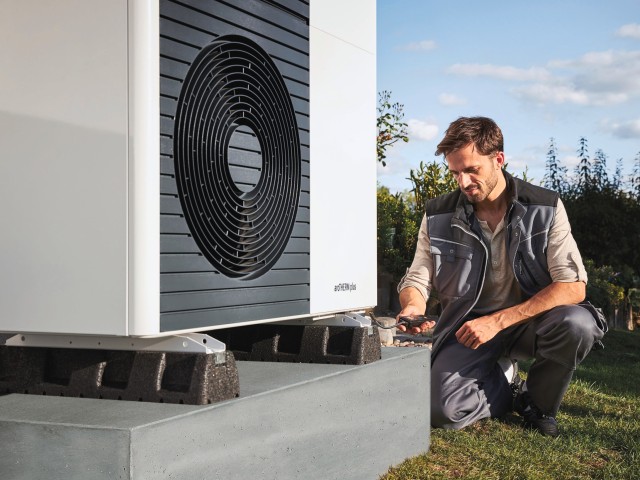
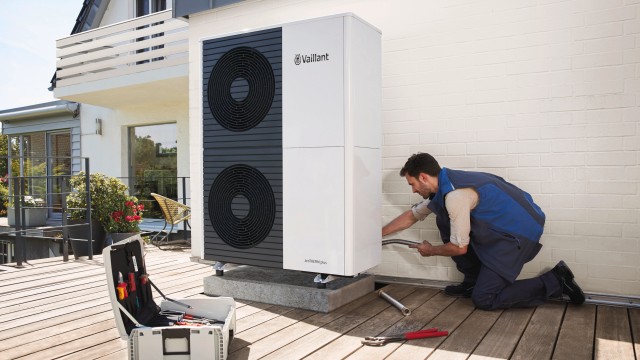
man doing work at the bottom of an air source heat pump.

How long does it take to install a heat pump?

There are a few considerations to take into account when choosing the best time of year to buy and install a heat pump. Installers will have to disconnect your current heating system, and depending on the amount of work involved and the number of installers, it can take up to a week to install a heat pump.

Like any new heating system, whether it’s a gas boiler or heat pump, you could be without heating and hot water for some time, disrupting your home without prior planning.

Top 7 considerations to time your heat pump installation

To help you prioritise the essential steps to make your home more energy and cost-efficient, we’ve collated our top tips for planning the best time to install a heat pump that suits your schedule.

man installing a Vaillant heat pump, he is kneeling down with an open brief case

Weather

The best time to install a heat pump is between March and September, during the spring or summer. Installing a heat pump during warmer months should provide minimal disruption to your home, as you won’t have gaps where you’re left without heating in much chillier seasons. As a result, getting a heat pump installed in spring or summer shouldn’t impact the internal temperature of your home as much while the system is switched off.

During spring and summer, usually, the conditions are much better for installation, too, and you’re unlikely to battle with the elements while the work is taking place. Compared to autumn or winter, dryer conditions allow for a potentially easier installation process for your chosen installer.

Having a heat pump installed and ready to fuel your home ahead of winter will also give you peace of mind knowing you have a working, reliable heat source in place before the colder weather kicks in.

Cost and demand

It costs the same throughout the year to install a heat pump, however, with less demand in the spring and summer months, it’s a good time to change your heating system before installers get booked up.

Contact a Vaillant heat pump installer for more information.

Don’t forget to check your eligibility and see if you can benefit from the Government’s Boiler Upgrade Scheme grant (BUS), which is available to support the costs of upgrading your boiler across homes in England and Wales. It covers up to £7,500 in costs to replace your boiler as part of their aim to achieve the UK’s net zero targets.

House renovations

You may prefer to time the installation of a heat pump while you’re working on other house renovations, such as installing underfloor heating (although this is not a requirement to run an efficient heating system). Preparing for installation like this alongside existing renovation plans can save you time and money while making your home more suitable for a heat pump.

Discuss your renovation with an engineer, who will advise where pipes and the water system should run while the installation is in progress. Not only will this help to reduce further structural changes, but it could also help to save on the overall costs of your renovation project.

Planning permission

The installer will assess your property and advise whether you need to apply for planning permission. Usually, you don’t need planning permission for a heat pump system. Instead, you may require ‘permitted development’, which is the right to carry out minor building works without a full planning application from your local authority.

In May 2025, new rules came into play, making it easier to install air source heat pumps in England without any need for planning permission. The rules are:

  • Installation within 1m of a property boundary.

  • Size limit increase from 0.6m3 to 1.5m3.

  • Up to two heat pumps allowed on detached homes.

  • Inclusion of air-to-air systems that are also used for cooling.

  • References to the updated MCS 020 noise standard.

In Wales, the advice is:

  • The appliance must not protrude more than 1 metre from the side of your home.

  • You must install the outdoor unit at least 1 metre from the property boundary.

  • You can install only one heat pump on the property.

  • You may need special approval to install a heat pump in a conservation area or a listed building.

  • The installation must comply with the requirements set in the Microgeneration Certification Scheme (MCS).

man putting the top lid on an air source heat pump.

If you live in a listed building or conservation area, the rules can be stricter. Therefore, it is recommended to check with your local planning authority before the installation process.

If you do need planning permission or a permitted development, and the nature of your application, it could take a few weeks, meaning you can time your installation based on the length of the application process. We recommend checking with your local authority for planning rules.

Improving your house insulation

Give yourself time to prepare your home for heat pump installation. A well-insulated home will help it feel considerably warmer for longer. Most heat is lost through the roof, ceiling, windows and walls.

During the consultation phase, your installer will carry out a heat loss calculation to assess how much heat your home requires to help you keep warm in the colder months. They may provide a list of requirements to further insulate your home so you can get the most out of a heat pump.

two men shaking hands outside

Timing of the service

As it’s best to install a heat pump during spring or summer, this will mean the annual service is due at the same time in the following year.

It’s best to service a heat pump during the summer months to ensure that the entire system works, including your hot water cylinder, at its optimum efficiency when the temperature drops.

For expert knowledge and exceptional service, discuss the best time to install a heat pump with one of our Vaillant installers who will advise on a suitable schedule to fit a new heating system.

Upgrading your radiators

Heat pumps work best with larger surface radiators, operating at lower flow temperatures, which improves their efficiency and helps to lower energy bills. If your radiators are old or ineffective, you may want to replace them at the same time as installing a heat pump, as the system will be designed to suit the heat loss calculation of the property.

It’s possible to upgrade your radiators at a later date, but it may require the heat pump to run at a higher flow temperature, which can be more costly. The engineer will advise which radiators are best to pair with your new heating system.

Get in touch with your Vaillant installer